


News and events
Foundation-funded AMR researcher secures further €1M to stop deadly superbugs spreading inside hospitals
A researcher supported through our national Antimicrobial Resistance PhD Training Programme has secured €1M in funding to scale AI technology that could help hospitals detect, predict and prevent the spread of drug-resistant infections.

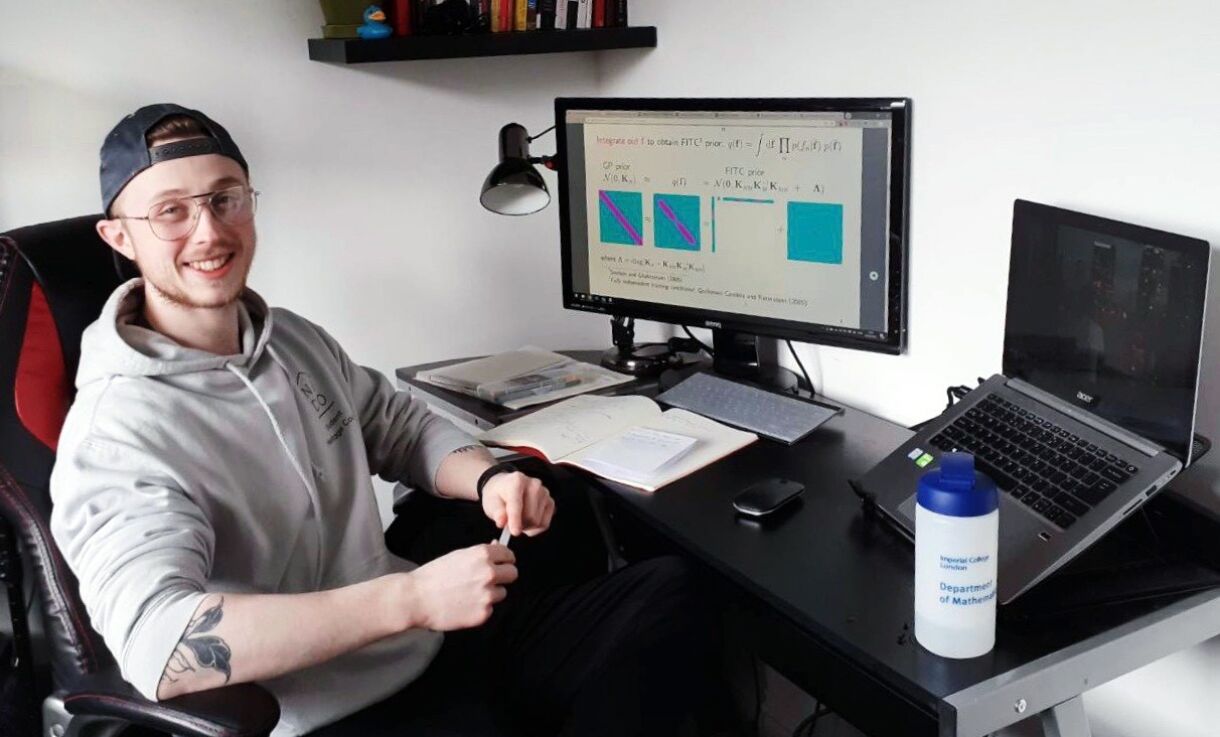
Dr Ashleigh Myall from Imperial College London was part of the first intake of our Antimicrobial Resistance (AMR) PhD Training Programme. He founded NEX Health Intelligence during his PhD in Mathematics at Imperial College London after working on the NHS response to COVID-19 and seeing first-hand how quickly infections spread inside hospitals.
In 2017 we committed £4 million to create the UK’s only national multi-disciplinary PhD training programme in AMR. Ashleigh is one of 27 future research leaders trained through the programme, which was set up to tackle the global threat of drug-resistant superbugs.
During his PhD, Ashleigh used network science -the study of patterns of connection -to analyse the movements of patients through hospitals to help hospitals improve the management of infection outbreaks. He also refined his analyses to predict the spread of infection for a specific pathogen and prevent the spread of individual disease-causing bugs in healthcare settings.
He said, “While supporting the NHS COVID-19 response, I realised the real challenge wasn’t just the number of admissions - it was how quickly infections spread between vulnerable patients already inside hospitals. During my PhD at Imperial, I began building AI systems to predict where infections would spread next.”
That became the foundation for NEX which is building an always-on infection intelligence platform that uses artificial intelligence to help hospitals detect, predict, and prevent highly resistant infections before they spread.
Early research has already shown that more targeted infection control interventions can reduce hospital infections by up to 46 per cent and deliver millions in cost savings -even against some of the most dangerous antibiotic-resistant pathogens.

Dr Angela Hind, Chief Executive of the Medical Research Foundation said; “Antimicrobial resistance is a global threat to human health and it’s already here, accelerating at a pace we can’t afford to ignore.
Our funding approach brings together scientists, clinicians and researchers from different specialisms – encouraging them to ask new questions and look at the problem from unexpected angles. Dr Myall was part of that programme and I am delighted to see how his vital work is having a real impact and attracting further funding.”
The new funding will be used to scale deployments across UK and international hospitals, complete UK regulatory and clinical safety work, and generate real-world clinical and economic evidence from live sites.
This funding call was led by Brighteye Ventures, with participation from Adeline Arts & Science, AFI Ventures (Ventech’s impact fund), Momentous Ventures, the Conception X Angel Syndicate, and industry Angels.
Read more about Dr Myall’s Foundation-funded research into stopping the spread of AMR in hospitals.

Challenging the rise of superbugs
Most of us take antibiotics for granted and trust that they will work when we need them - that our chest infection will be treated, that routine surgery is safe and that antibiotics will do what they’ve always done since being put to use in modern medicine. But that could be about to change.
Read more



£2.85m National PhD Training Programme in AMR
The Medical Research Foundation is investing £2.85m to create the only national PhD Training Programme that will train new scientists to explore ways to tackle antimicrobial resistance, one of the greatest emerging threats to human health.