Transforming pain management in babies
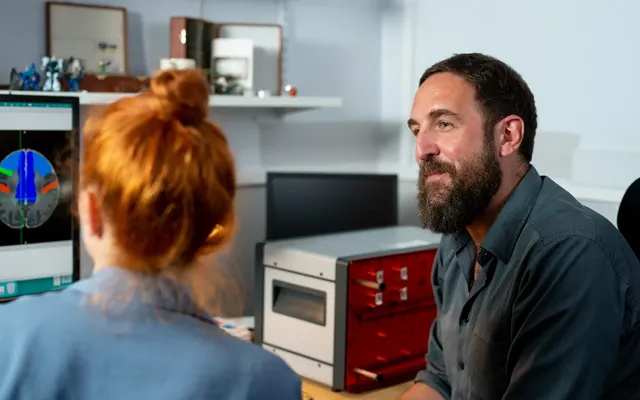
Professor Lorenzo Fabrizi from UCL is uncovering how babies experience pain.
Thanks to you, Professor Lorenzo Fabrizi from UCL is uncovering how babies experience pain – a crucial step towards transforming how pain is managed
in neonatal care.
The sickest and most premature babies ... may undergo around 10 painful procedures every day.Professor Lorenzo Fabrizi
We awarded Lorenzo an Emerging Leaders Prize for pain research in 2020 and later, a Changing Policy and Practice Award, specifically designed to help him share his exciting discoveries with the world.
“One in 10 babies worldwide is born prematurely,” Lorenzo explains. “The sickest and most premature babies spend an average of 44 days in neonatal care, with 40 per cent of that time in intensive care, where they may undergo around 10 painful procedures every day.”
“All of this is happening at a time when the brain is developing rapidly,” says Lorenzo. Pain in young babies is not only distressing in the moment for the child, their families, and carers, but crucially, unmanaged pain can have lasting effects on a child’s development and future health.
Beyond crying: what can brain imaging tell us?
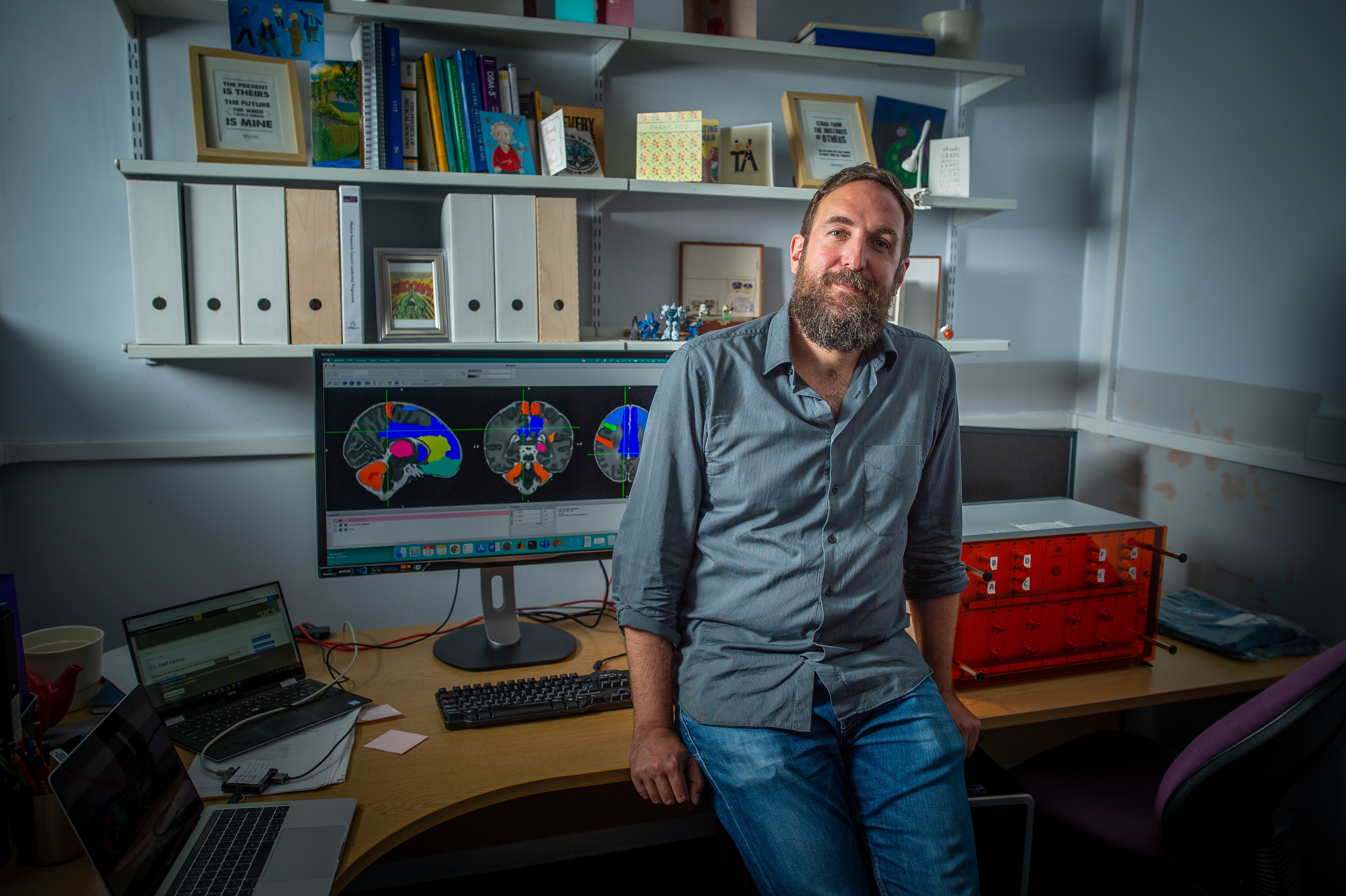
Lorenzo used brain imaging techniques to better understand infant’s experience of pain. “Before we started using these methods, pain was assessed only from behavioural observation,” Lorenzo explains. “But responses like crying can be misleading – hunger or cold can look the same as pain.”
“Behavioural responses are also subjective – relying on a carer’s intuition,” he adds.
Through brain imaging, Lorenzo’s team found a strong cortical response in babies’ brains, in the absence of any behavioural signs like crying – revealing that infants can be processing pain even when we can’t see it through observation alone.
New insights about how babies feel pain
Lorenzo’s research reveals babies process pain very differently from adults. “The response to a painful stimulus is very different in a neonate compared to an adult,” he says. “Brain circuitry, which is responsible for brain processing, is still not fully mature – even at term age.”
Their brain imaging demonstrated that the brain connections necessary for pain perception develop after 32 weeks of gestation and continue to mature post-birth.
Full-term babies adapted to repeated painful stimuli, showing decreased brain responses over time. In contrast, preterm babies do not adapt, indicating a higher vulnerability to repeated pain, again highlighting the importance of monitoring painful experiences in premature infants.
Real-world changes
“Our research could influence neonatal pain management in two main ways,” says Lorenzo. “First, by providing an objective way to measure pain processing. Using brain scans allows us not to rely solely on a carer’s intuition.”
The second approach involves timing painful procedures when the baby’s brain is less receptive to pain. “The brain oscillates between different states spontaneously,” he explains. “If we time procedures when the brain is naturally less receptive, we can reduce the pain experience.”
"I always knew my babies were feeling something. These are our children. We know when they’re in pain."
When Abbie gave birth to identical twin girls prematurely at 27 weeks and five days, they each weighed about a pound. For the next five months, they were in a neonatal intensive care, undergoing numerous medical procedures. Now, as the girls are older, Abbie reflects on their time in neonatal care, and the difference a pain severity scale could have meant to them.
Abbie's storyPain in young babies is not only distressing in the moment for the child, their families, and carers, but crucially, unmanaged pain can have lasting effects on a child’s development and future health. Professor Lorenzo Fabrizi
A pain severity scale
Thanks to our Changing Policy and Practice Award, Lorenzo’s team have now developed a pain severity scale based on 59 clinical trials, ranking 15 common neonatal procedures – such as heel pricks and collecting blood samples – on a scale from 0 to 100. The scale recommends things parents and clinicians can do to mitigate pain for each procedure, such as skin-to-skin contact.
Pureza Laudiano-Dray, a research nurse at University College London, has helped Lorenzo to develop and distribute the pain severity scale to hospitals across the country.
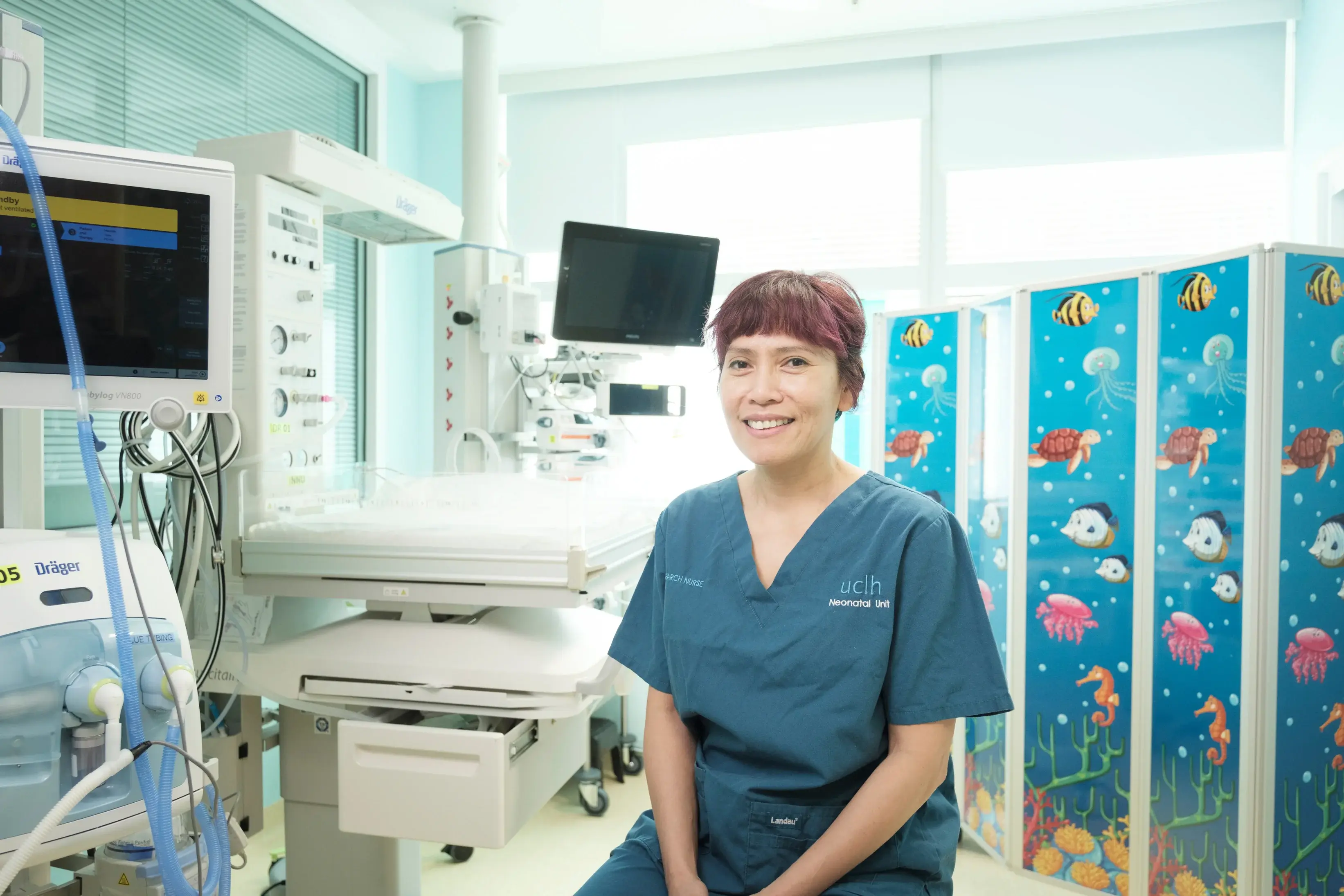
When Pureza first started working in neonatal care in the early 2000s, the idea that babies could feel pain was still quite controversial. “Back then, there was still quite a lot of debate about how babies feel pain and whether certain procedures hurt them,” she explains.
Parents are often not fully aware of how painful a procedure is, what it involves, or when it will happen. Pureza Laudiano-Dray
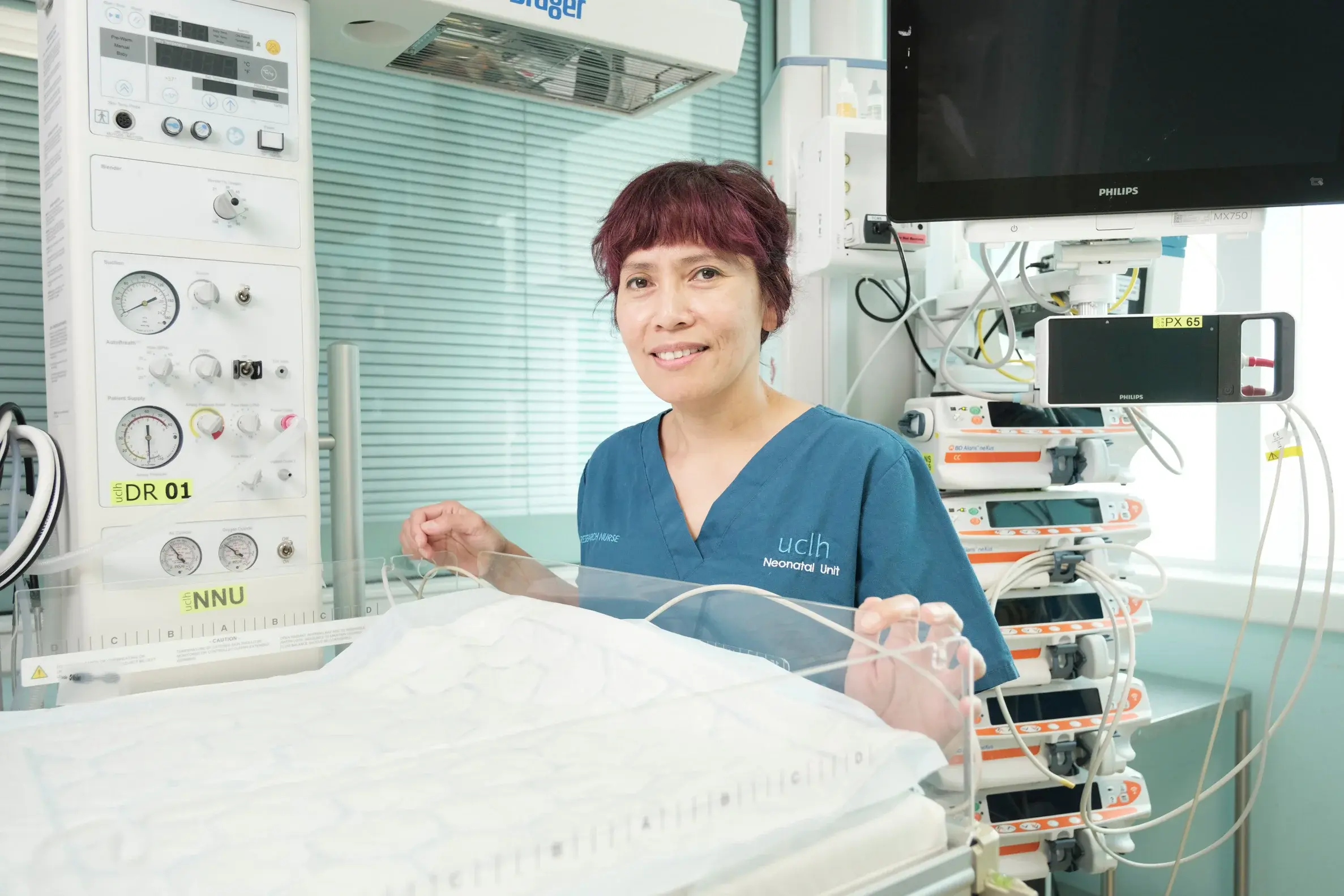
While understanding of neonatal pain has improved over the past few decades, Pureza notes that there is still a lack of focus on pain management in neonatal units. “In my experience,” Pureza says, “the long-term impact of pain during this stage of life is not something that all nurses are fully aware of.”
There’s also limited knowledge about how painful certain procedures are. “Skin-breaking procedures are often seen as more painful because they draw blood,” says Pureza. But Lorenzo’s research has shown that even procedures which do not break the skin, such as suctioning or inserting a feeding tube, can be painful for infants.
The communication challenge
This knowledge gap has made it difficult for neonatal staff to give parents clear information about their baby’s experience. “As a nurse,” Pureza explains, “it can be really hard to know if a baby is in pain. When parents ask, ‘How painful is it?’ it’s sometimes difficult to give a confident answer.”
Having a child in a neonatal unit can be an especially difficult time for parents. “It is very hard. There are strong emotions, and they really appreciate support, warmth, and kindness from staff,” Pureza explains. “Having information and support is so important for them. That’s what we need to really foster.”
Your support will have a real impact on the healthcare system, patients and families, and society as a whole.Professor Lorenzo Fabrizi
Transforming neonatal care
Pureza has established a network of ‘pain champions’ – nurses, doctors, occupational therapists, physiotherapists, and clinical psychologists – who are committed to implementing the pain severity scale in their units.
Feedback from neonatal staff has been very positive. The scale has been praised for its simplicity and clarity.
For Pureza, the response from parents has been particularly rewarding. “Parents have found it easy to understand, and many said they’d like to see the scale placed beside the cots,” she says. “To me, this was the biggest learning – it showed us that parents really do want this kind of information.”
The next steps for Lorenzo and Pureza are to translate the scale into multiple languages and simplify the scientific language to make it even more accessible.
“The impact on patients is direct,” says Lorenzo, “enhancing their experience of clinical care at the time that they’re experiencing it, but also improving their long-term outcomes.”
“I want to thank the Foundation’s donors for prioritising this area of research. Your support will have a real impact on the healthcare system, patients and families, and society as a whole,” says Lorenzo.

Abbie's story
When Abbie gave birth to identical twin girls prematurely, for the next five months, they were in a neonatal intensive care and underwent numerous medical procedures.
Now the girls are older, Abbie reflects on their neonatal care, and the difference a pain severity scale could have meant to them.
Abbie's story
More impact stories
Take a look at our impact pages for a range of stories about the difference we have made through our funded research.
Our impact
Our full impact report
Thanks to you, we’re supporting some of the brightest and best medical researchers in the world to solve neglected health problems.
In our impact report, we showcase some of the life-changing science you’ve made happen.
2025 Impact ReportDonate now and change lives
Your support has led to ground-breaking discoveries and life-changing advances, but there is still more to do. For every researcher we support, there are many more we can’t – not because they lack merit, but because we lack the funds to support them all. You can change that. Your donation today could support research like Lorenzo's, and could fund the next life-changing discovery.
Donate now