Exploring the mental health impacts of phone and social media use
Professor Rina Dutta from King’s College London is investigating the impact of phone and social media use on mental health.
When children first started getting smartphones a decade ago, there was no research about their impact. Now, researchers are increasingly interested in both the positive and negative effects of digital technology on our mental health.
There’s no doubting that smartphones and social media have become integral aspects of all our lives. Studies in the UK have found that adolescents spend on average four hours per day on their smartphones, and up to five hours on social media. But what impact is this having, especially on young people who are already struggling with their mental health?
Thanks to donations from the Orange Tree Trust and the Charles and Elsie Sykes Trust, we’ve supported vital new research in this area, led by Professor Rina Dutta and project managed by Dr Amanda Bye from King’s College London’s Institute of Psychiatry, Psychology & Neuroscience.
High levels of problematic phone use
Rina’s latest study has revealed high levels of problematic mobile phone use, disturbed sleep, and self-harm among young people with mental health conditions.
In partnership with YoungMinds, the ‘3S-YP’ study recruited 362 young people aged between 13 and 25 years old who had accessed mental health services in South-East London.
Rina and her team found that more than 80% of the 362 young people had self-harmed at least once, and high levels of depression, anxiety, and disturbed sleep were all common.
On the use of digital technology, more than half reported using social media or their smartphones after midnight on a weekday. As well as this, nearly a quarter were found to use social media for more than five hours on a weekday.
The researchers were able to build an accurate picture of each participant’s behaviour, using innovative research techniques which were co-produced alongside young people with lived experience of self-harm. It included sourcing data from electronic health records, as well as the participants’ smartphones and social media accounts.
Everyone in the study provided data over the course of six months, to establish how patterns of social media and smartphone use can be associated with self-harm and mental health.

"I often feel overwhelmed, especially when I’ve been scrolling for a long time.”
Rebecca, 24, is a YoungMinds Youth Advisor on Rina’s project. Like all of us, she spends a lot of time on her phone – around seven hours a day, including two to three hours on social media. Her experience is helping researchers understand the effects of digital technology on our mental health, both positive and negative.
Rebecca's story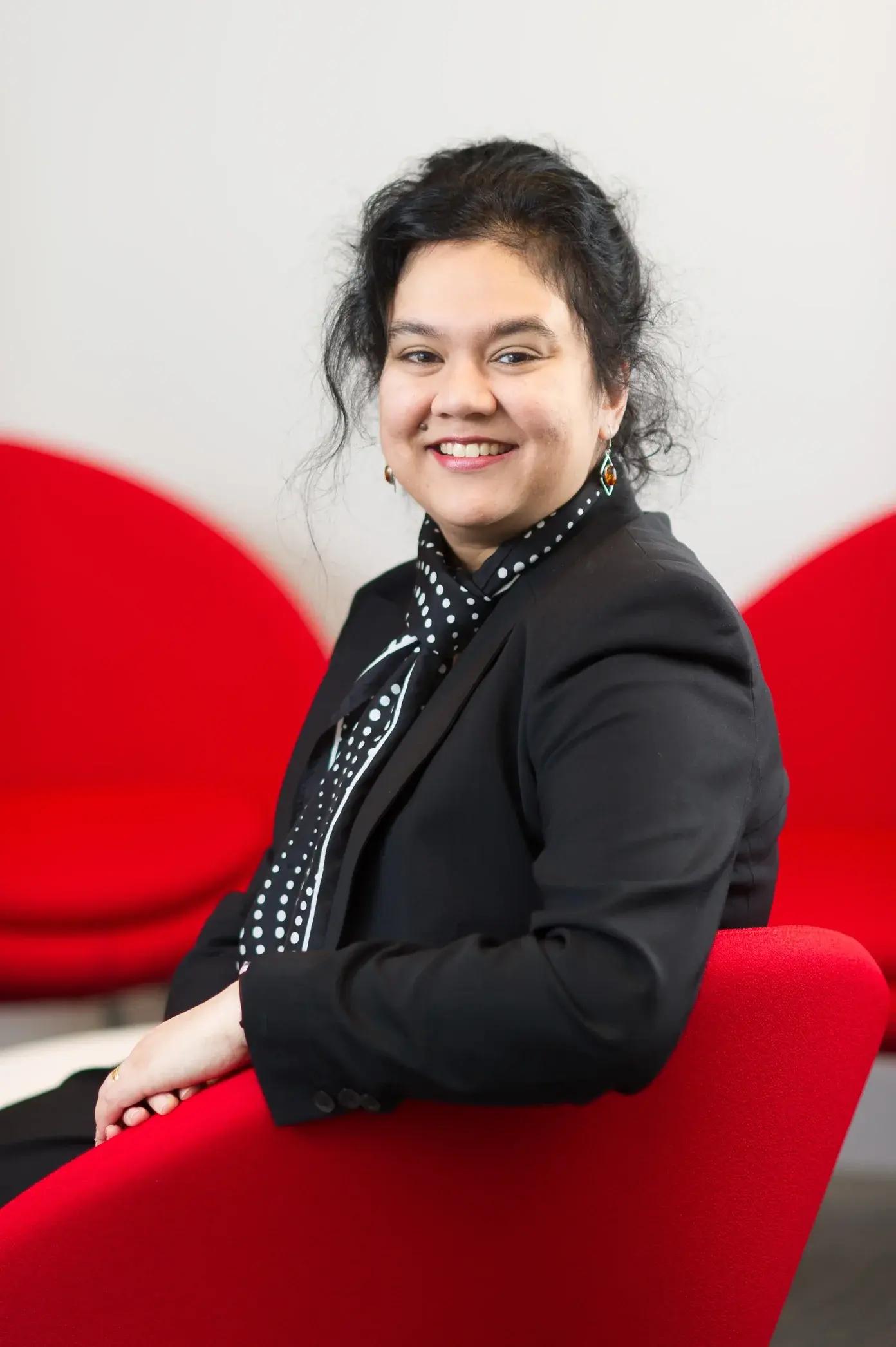
A comprehensive approach
Rina says, “While there has been extensive debate about the relationship between social media and smartphone use and rates of self-harm, studies up to this point have largely been limited by their design.”
“Studies so far have only been able to demonstrate associations rather than providing any insight into the relative timings of different behaviours or underlying mechanisms. Our comprehensive approach is allowing us to properly investigate the impact of digital technology on youth mental health.”
Rina says these studies have laid the foundation for future work in this area, which is much needed. “Ultimately, we hope these findings will lead to better support for young people who are struggling with their mental health.”
“Young people from YoungMinds Youth Advisor programme have been involved in every part of this study, using their skills and experience to guide researchers,” says Hannah Kinsey, Head of Training and Service Design at YoungMinds.
This is a ground-breaking approach to participation, which shows how important it is to involve young people in both designing research and understanding the impact of social media on them. Professor Rina Dutta

Rebecca's story
Rebecca, 24, is a YoungMinds Youth Advisor on Professor Rina Dutta’s project. Rebecca is helping researchers understand the effects of digital technology on our mental health, both positive and negative.
Rebecca's story
More impact stories
Take a look at our impact pages for a range of stories about the difference we have made through our funded research.
Our impact
Our full impact report
Thanks to you, we’re supporting some of the brightest and best medical researchers in the world to solve neglected health problems.
In our impact report, we showcase some of the life-changing science you’ve made happen.
2025 Impact ReportDonate now and change lives
Your support has led to ground-breaking discoveries and life-changing advances, but there is still more to do. For every researcher we support, there are many more we can’t – not because they lack merit, but because we lack the funds to support them all. You can change that. Your donation today could support research like Rina's, and could fund the next life-changing discovery.
Donate now