


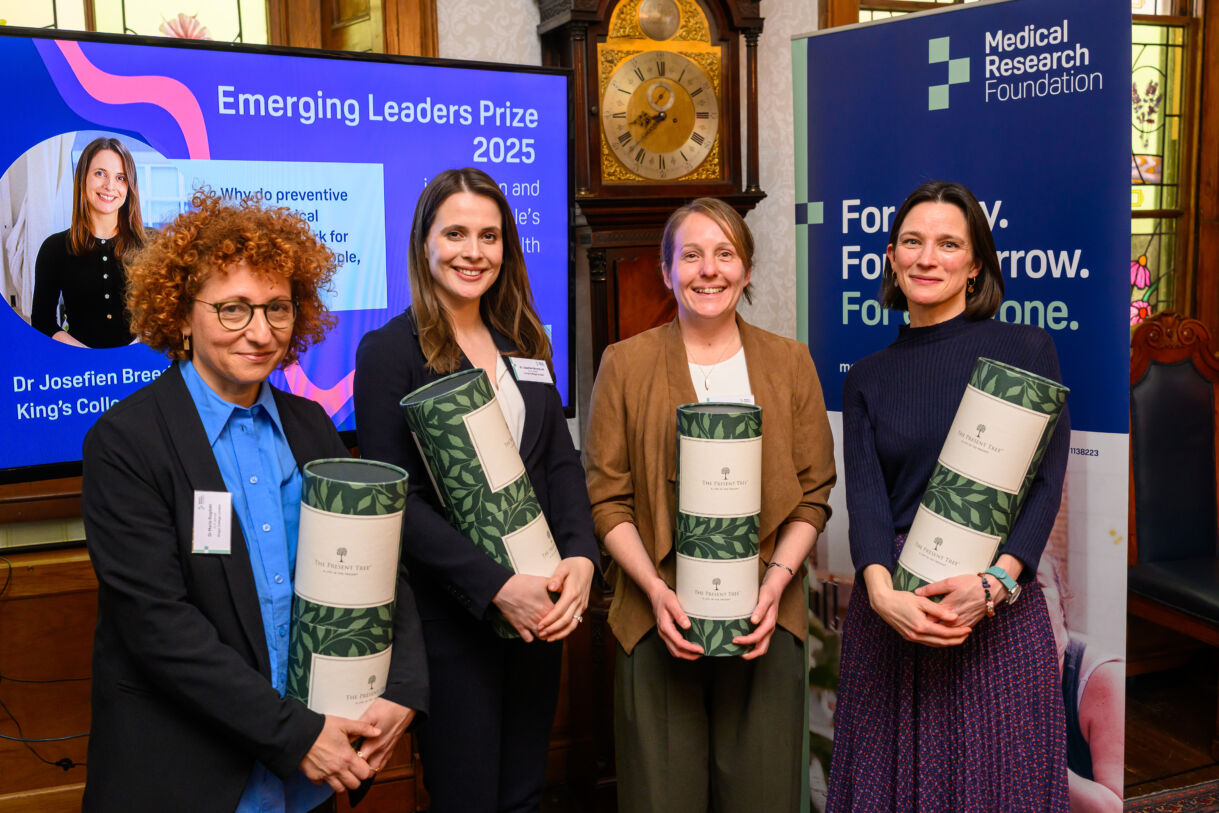
Emerging Leaders Prize fuels the future of research into young people’s mental health
A look at the future leaders receiving funding in our latest round of Emerging Leaders Prize awards.
Mental health

Psychosis is a serious mental state that can profoundly affect how you think, feel, and experience the world. It often begins in adolescence - a critical period for education, relationships, and independence – which can make it particularly damaging for young people. Early and effective treatments can transform lives, but the exact mechanisms are still not fully understood.
Dr Maria Rogdaki and her team at King's College London investigate the underlying causes of neurodevelopmental conditions, with a particular focus on psychosis in young people with a genetic condition known as 22q11.2 deletion syndrome. As well as presenting a diverse range of symptoms throughout the body, 22q11.2 also comes with a significantly increased risk of psychosis.
Maria and her team have already shown that increased levels of the hormone dopamine in the brain might be an early indicator of psychosis before symptoms appear. Now, they will combine brain imaging with studies of lab-grown brain cells to uncover how these changes disrupt the normal function of the brain. A key goal is to develop a pioneering method for testing new medicines, which will accelerate the discovery of more effective treatments.
This project will bridge the gap between brain imaging and laboratory science, taking the next step towards developing personalised treatments that would change the lives of young people affected by psychosis and their families.
A look at the future leaders receiving funding in our latest round of Emerging Leaders Prize awards.